Decisions live with the feature.
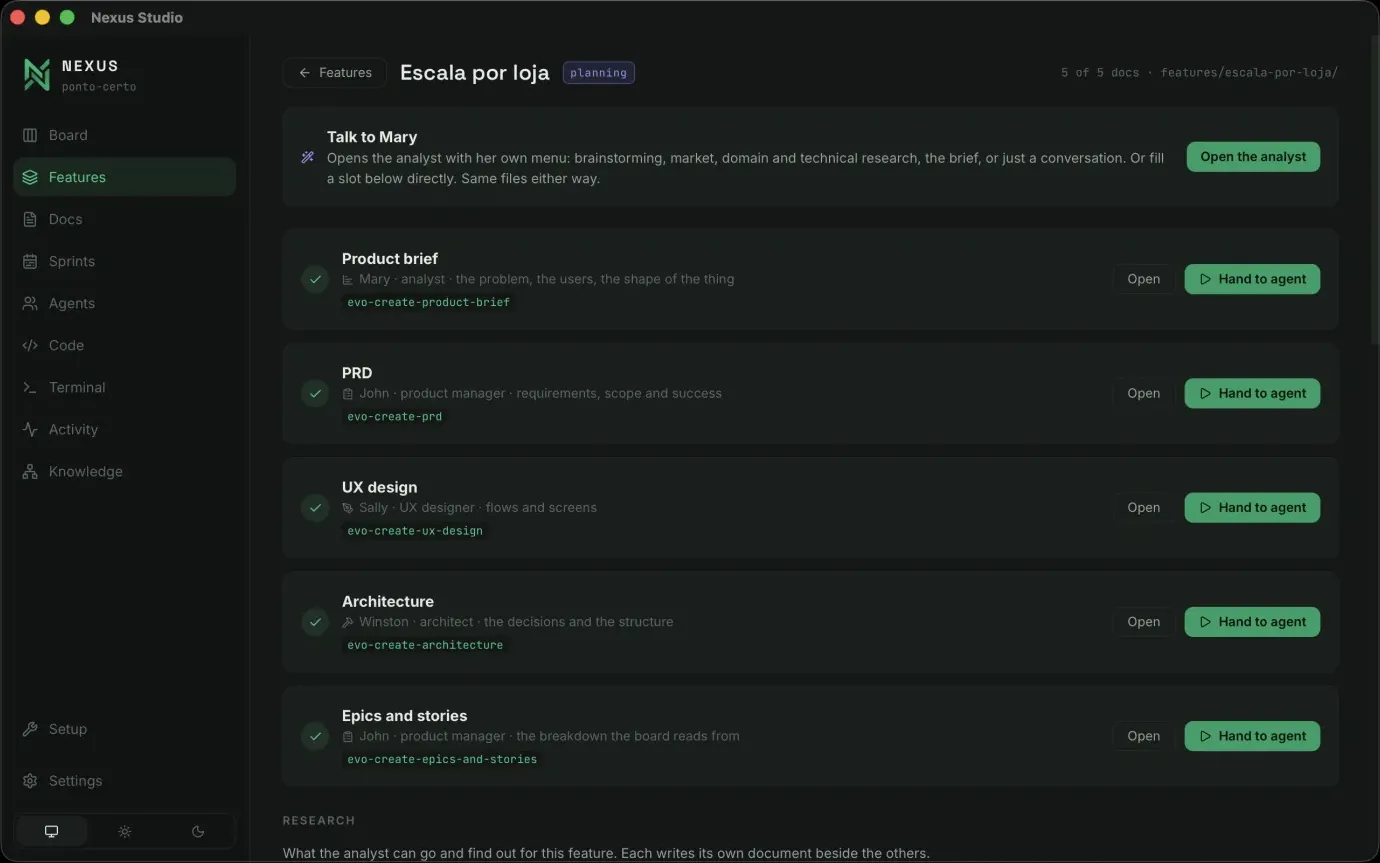
Brief, requirements, UX, architecture and epics sit together, readable by you and by the next agent that picks the work up.
- Editable artifacts
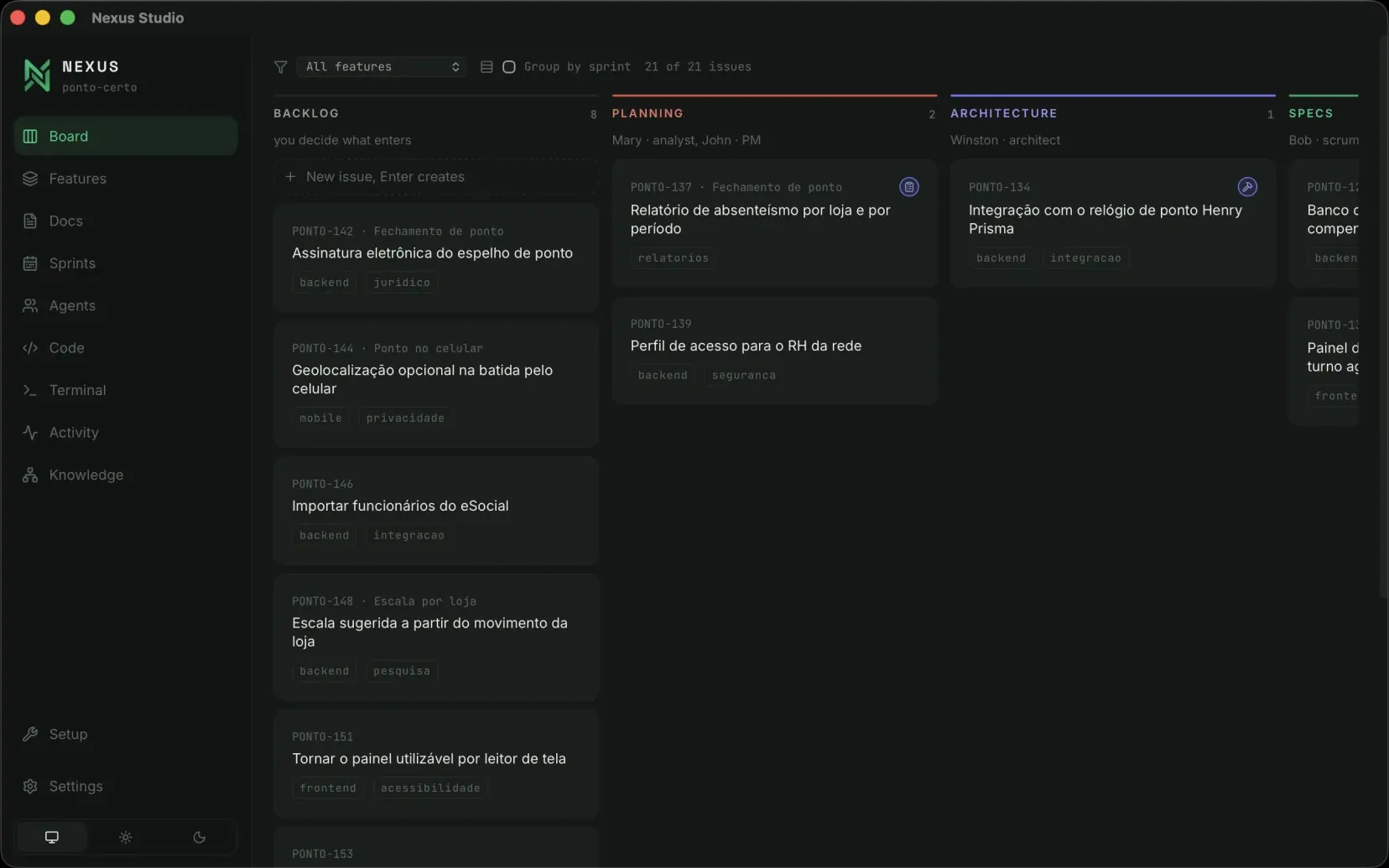
- Epics become issues
- Existing projects
Desktop app · Pre-release
Nexus turns an idea into work that was planned, tested and reviewed, instead of decisions buried somewhere in a chat log.
The method, in the open
Every stage has an owner. You sign off on the result.
Small changes take a shorter path. The route stays visible either way.
The product
Brief, requirements, UX, architecture and epics sit together, readable by you and by the next agent that picks the work up.
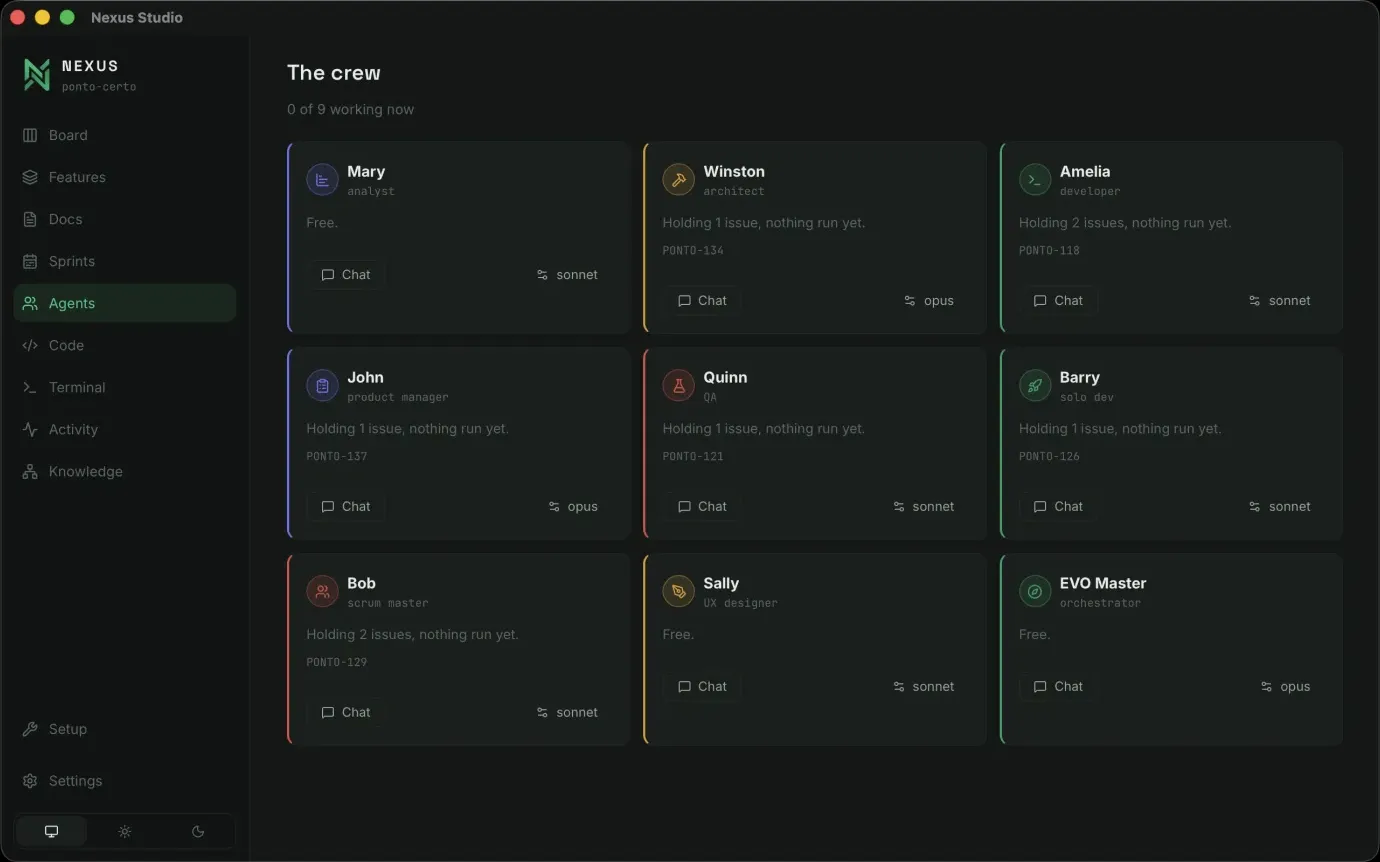
Nine sharply defined roles instead of one assistant trying to be all of them at once.
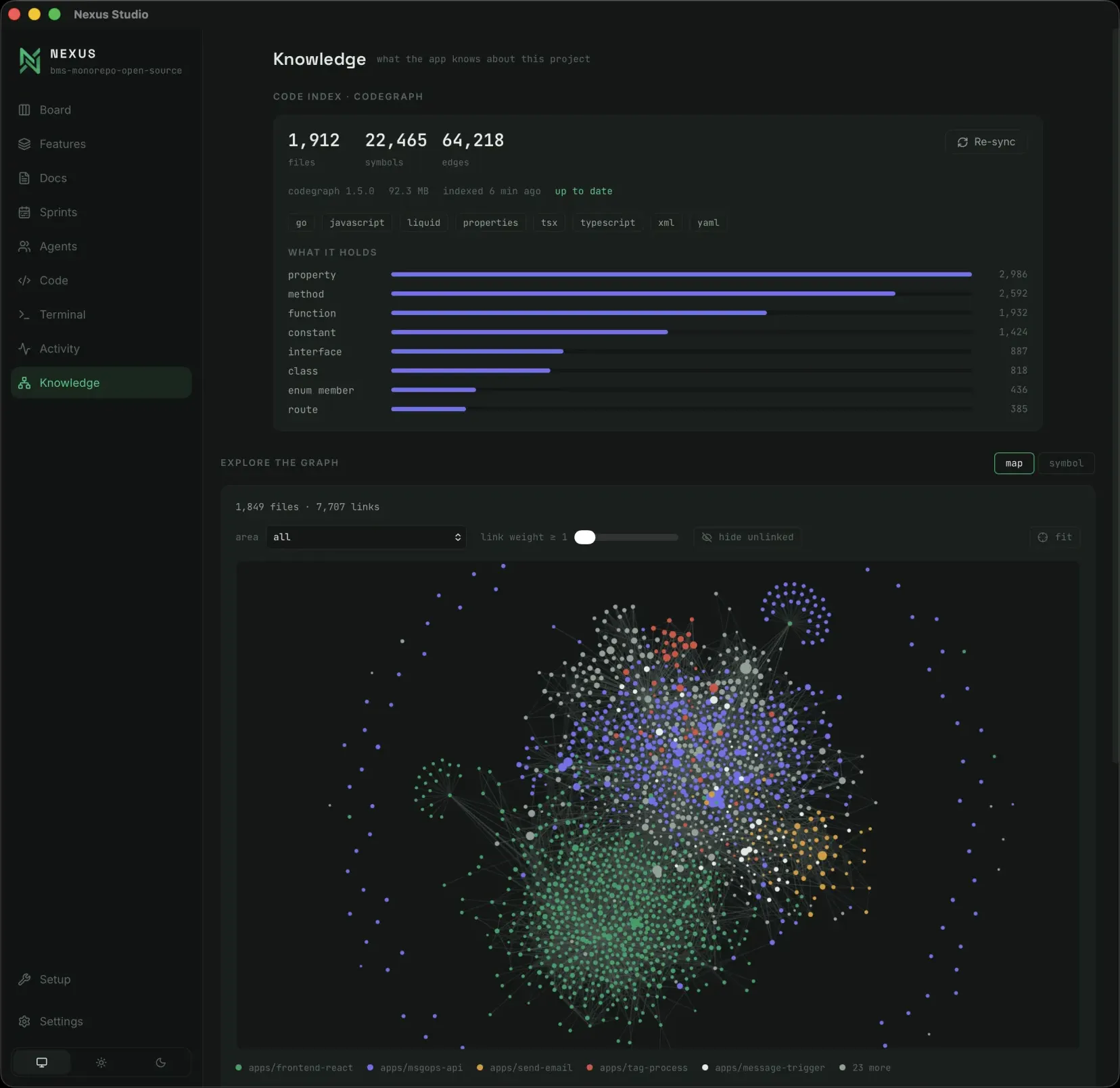
A navigable map gives you and the agents the same view of the repository.
Local-first from day one
Issues, plans and decisions are text files in your own repository. Turn the AI off and the tracker keeps working.
--- key: CORE-142 title: Electronic sign-off for timesheets column: specs origin: full owner: agent:amelia --- ## Context Readable by people, by agents and by git.
Download
Free while it is in this phase. Builds for macOS, Windows and Linux, with no account, no sign-up and no cloud.
macOS will say the app is "damaged". It is not: an unsigned app carries no signature to check, and that is the wording Apple chose. Right-click and Open is not offered for this message. Drag the app to Applications, then run this once:
xattr -dr com.apple.quarantine "/Applications/Nexus Studio.app"
Windows shows a SmartScreen warning instead: choose More info, then Run anyway. Signing and notarisation are what remove both warnings.
Changelog
Written by hand when a release is cut, and read by the installer, the app and this page alike. The entries are in English everywhere.
Pre-release, no spin
Pre-release. Every screen above is the product running.
Board, issues, specs, planning, sprints, documentation, configurable agents, live execution, questions asked mid-run, memory, terminal and editor. The schema battery runs 560 checks, including 69 files broken on purpose that have to be refused.
Public builds still need Apple notarisation and Windows signing. Git and pull requests inside the app were deliberately left out of the first version.
Claude Code. On launch, Nexus checks the other local requirements and tells you what is missing.
What the method rests on
EVO Method is an open method for building software with AI, forked from BMad Method and adapted independently. It exists on its own, outside this product, and Nexus Studio is the app that makes following it a matter of opening a folder.
Read EVO Method on GitHubA public method, kept separately. Studio implements it rather than replacing it.
Built on
Nexus does not do all of this by itself. Three independent projects are part of what you use here, and they deserve to be named.
The engine underneath. Every agent in Studio is Claude Code, running on your machine under your own subscription.
RequiredKeeps what the agents learn, per project and across projects, so the next session does not start from nothing.
OptionalIndexes the project so an agent finds what already exists instead of writing it again. The code map is drawn from it.
OptionalIndependent projects, credited for what they do. None of them sponsors, endorses or is affiliated with Nexus Studio or Evolution.
Pre-release
Download the build for your platform, or talk to us before you start.
The portal is where the community and support live. The email opens your mail client with the subject filled in, for reaching us directly.